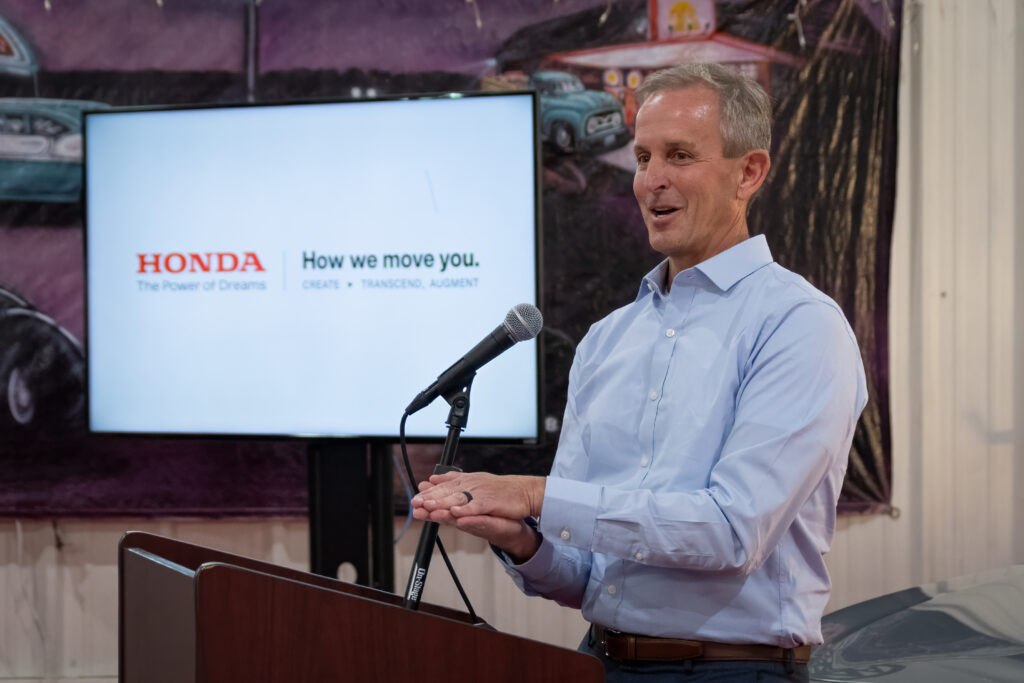
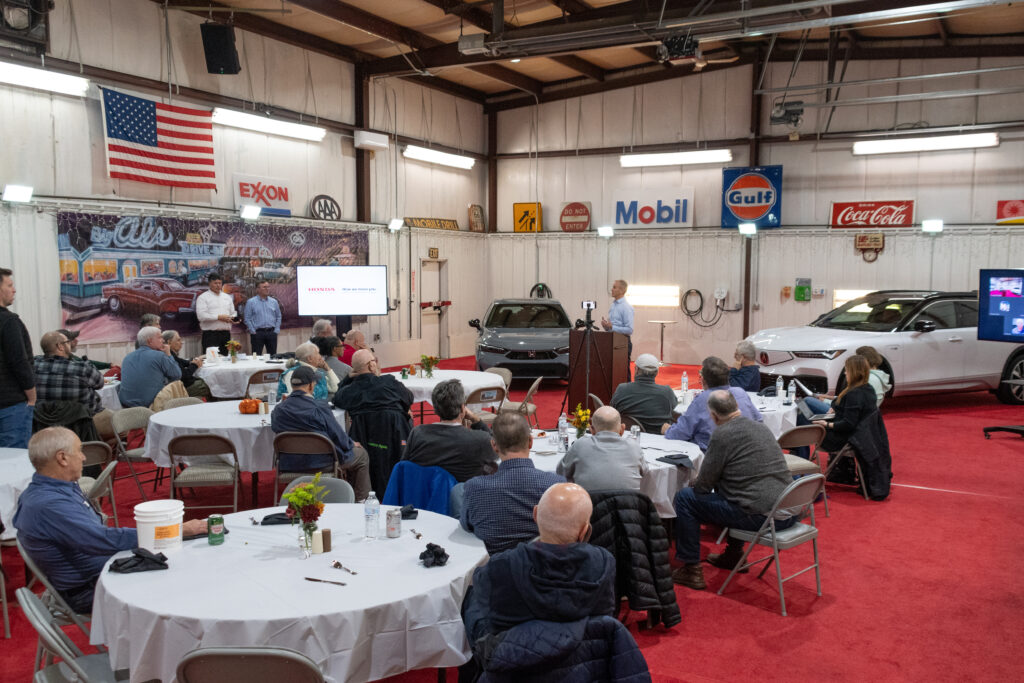
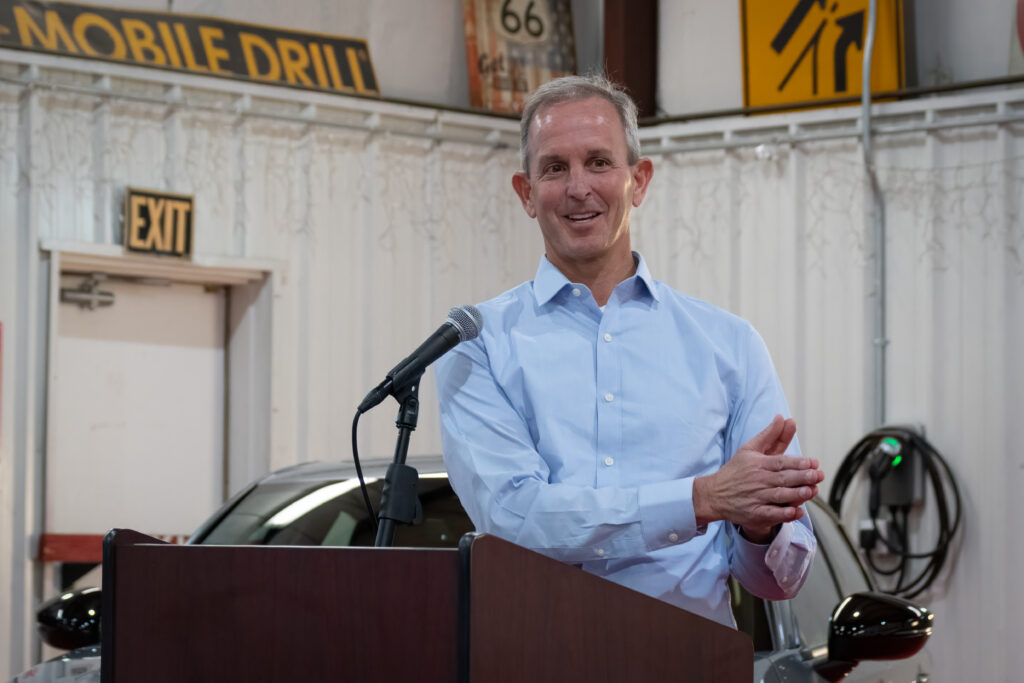
At the most recent New England Motor Press Association (NEMPA) monthly gathering just before Thanksgiving, Honda was featured as the highlighted monthly guest, bringing the community of automotive journalists and enthusiasts together. During the event, Mike Fischer, an executive chief engineer at Honda with over three decades of experience, shared Honda’s vision for the brand’s transformation in the electrified era.
Fischer began by reflecting on his career journey, from working on the Acura CL—the luxury brand’s first model built in Ohio—to leading the design and production of the new Acura Performance EV Concept. This latest project symbolizes Honda’s bold leap into the electric vehicle market, set to culminate with the production of a new EV model in Ohio starting late next year. Honda currently produces the Prologue and Acura ZDX which are produced by GM and based on the Blazer EV. But the future EVs will be 100-percent Honda/Acura creations.
Central to the discussion was the Honda EV Hub, a $5 billion initiative designed to move Honda’s manufacturing processes into the future. Fischer outlined the significant changes underway at the Marysville and East Liberty Auto Plants, which are being retooled to build internal combustion engines, hybrids, and battery-electric vehicles on the same production line. In addition, the Anna Engine Plant is being equipped with six massive 6,000-ton “megacasting” machines to create cases for Honda’s innovative Intelligent Power Units (IPUs), aka its battery hardware.
The overarching theme of Fischer’s remarks was simplicity: Simple Design, Simple Manufacturing, and Simple Logistics. He emphasized that this vision is aimed at creating flexible, human-friendly, and environmentally responsible production environments. Honda is consolidating production lines, automating complex processes, and creating more ergonomic workspaces to support its associates. In tandem, advanced technologies like the Internet of Things are being utilized to ensure seamless demand-driven production.
As part of its commitment to sustainability, Honda is also incorporating resource circulation into its production strategy. This approach emphasizes recycling and reusing materials to reduce waste, contributing to Honda’s global goal of achieving carbon neutrality by 2050. Among these initiatives is the use of a newly developed aluminum material designed for increased recyclability, which will help cut greenhouse gas emissions by 4,000 metric tons annually.
Fischer concluded by emphasizing Honda’s philosophy of turning challenges into opportunities, signaling a new chapter of innovation and legendary products from North America. The evening served as a testament to Honda’s dedication to quality, efficiency, and sustainability, offering a glimpse into the company’s electrified future.
No comments yet.